Every culture has its own customs, many of which have roots in ancient times, when people could not explain many things scientifically. Today, we are talking about the things that, according to old folk beliefs, should be removed from the house after someone passes away.
Throughout history, people have developed various rituals to help them cope with one of life’s greatest challenges: the death of a loved one. These rituals were not only a way of marking a loss, but also served as a bridge between two worlds—the world of the living and the world of the dead.
In the Balkans, as in many other cultures, certain funeral customs carried deep symbolic meaning. They were believed to help prepare both the family and the deceased spiritually for the soul’s transition into the next world. These rituals were thought to bring peace to the family while also protecting the living from the consequences of failing to properly honor the deceased.
One of the most important customs found in many Balkan traditions was the belief that four specific things should be removed from the house immediately after the funeral. People believed that if these objects remained inside the home, they could keep the soul of the deceased attached to the world of the living and prevent it from peacefully moving on.
These rituals were rooted in a deep respect for life and death and in the belief that death was not the end, but rather a transition that should take place in harmony and peace.
1. The Deceased Person’s Bedding
The first thing traditionally removed from the house was the bedding on which the deceased person had lain.
Because it was one of the last things the deceased had been in contact with, people believed that the bedding could keep the soul connected to the world of the living.
For this reason, the bedding was removed from the house immediately after the funeral. Symbolically, this was believed to break the connection between the worlds of the living and the dead, allowing the deceased to leave this world without returning to their final place of residence.
The ritual also carried a deep emotional meaning: it represented letting go and allowing the soul to find peace.
2. The Deceased Person’s Clothing
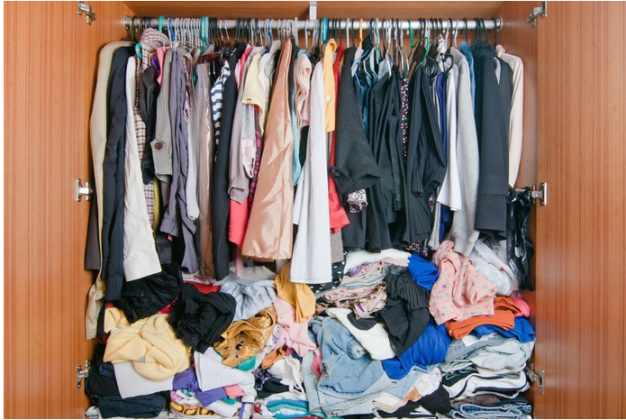
The second thing that was traditionally removed from the home was the deceased person’s clothing.
The clothes they had worn throughout everyday life carried their scent, memories, and, according to folk belief, their energy.
It was believed that the soul could remain attached to these clothes, preventing it from freely passing into the next world. Therefore, removing the clothing from the house was considered an important way of allowing the soul to free itself from its former earthly life.
It was also seen as another way of showing respect to the deceased and helping them continue their journey peacefully, without being held back by attachments to this world.
3. Mirrors
The third thing with important symbolic meaning was mirrors.
Mirrors were once considered bridges between the worlds of the living and the dead because they allowed the soul to see its own reflection.
According to folk belief, the soul could become trapped in a mirror while looking at its reflection, preventing it from moving on to the next world.
For this reason, after a death, mirrors were often covered or removed from the house.
This custom carried strong symbolism because the mirror represented not only a passage between worlds, but also a potential obstacle the soul needed to overcome in order to find peace.
Although this custom has largely disappeared in modern times, it remains part of folk tradition for many people.
4. Water
The fourth thing traditionally removed from the house was water.
In folk belief, water had a dual meaning. It represented purification, but it could also be seen as an obstacle preventing the soul from crossing from the world of the living into the world of the dead.
People believed that the soul might become trapped in water by seeing its own reflection, preventing it from completely leaving this world.
Removing water from the house therefore became a ritual marking the completion of the farewell process.
Symbolically, water represented the final obstacle the soul needed to cross, clearing the way toward peace and a tranquil transition.
Although these customs are rarely practiced in modern society, they still hold significant cultural value and serve as a reminder of our connection with previous generations and their beliefs.
These rituals were not only intended to honor the soul of the deceased, but also to preserve balance in the lives of those who remained behind.
According to this tradition, death is a transition rather than an end, and the deceased should be sent on their final journey with respect and with rituals believed to allow the soul to pass peacefully.
Although modern science does not support these supernatural beliefs, their presence in cultural heritage continues to play an important role in the traditions and identity of many communities.
Through these customs, the world of the living was believed to be protected while the world of the dead was respected, maintaining a balance recognized in folk traditions for generations.
According to this tradition, death should not simply be feared, but accepted as a natural part of the cycle of life. Even though many people no longer practice these customs today, their symbolism and meaning remain deeply rooted in collective cultural memory.