
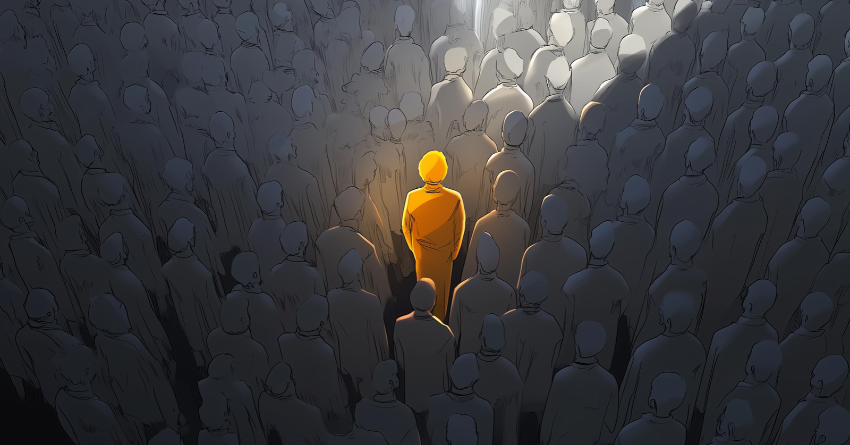
Have you ever felt like you see the world differently from everyone around you? Maybe you notice things others overlook, question ideas that most people accept without thinking, or feel more comfortable being alone than surrounded by people.
Sometimes, being different can make you feel misunderstood or disconnected. But not fitting in doesn’t necessarily mean something is wrong with you. It may simply mean your personality, values, and perspective don’t always match those of the people around you.
Everyone is unique in some way, but certain characteristics can make you feel especially different from your social circle.
Here are five signs that you might not be like most people around you.
1. You Notice Things Other People Completely Miss
You have a natural tendency to observe the world carefully. While others focus on what someone says, you pay attention to their tone of voice, facial expressions, and subtle changes in behavior.
You might notice when a friend is upset even though they’re smiling, or sense tension in a room before anyone mentions it.
This awareness can make you thoughtful and understanding, but it can also become exhausting.
You sometimes wish you could stop noticing every little detail and simply enjoy the moment.
Your observational skills may help you understand situations more deeply, but remember that noticing something doesn’t always mean your interpretation is correct.
2. You Prefer Meaningful Conversations Over Small Talk
While some people enjoy discussing celebrities, gossip, or everyday events, you often find yourself craving conversations with more depth.
You want to talk about dreams, human behavior, personal struggles, relationships, and the meaning of life.
It’s not that you consider ordinary conversations beneath you. You simply feel more connected when people share their genuine thoughts and emotions.
You may have hundreds of acquaintances but only a handful of people you truly connect with.
For you, one honest conversation can be more satisfying than an entire evening of superficial socializing.
You value authenticity over popularity and emotional connection over social approval.
3. You Don’t Feel the Need to Follow the Crowd
One of your strongest characteristics is your willingness to think independently.
You don’t automatically believe something just because everyone else does. Instead, you prefer to examine situations, ask questions, and form your own opinions.
You might choose a different career path, reject certain social expectations, or pursue interests that others don’t understand.
Sometimes, people interpret your independence as stubbornness or rebellion.
But you’re not necessarily trying to be different.
You simply don’t want to sacrifice your values or happiness just to gain acceptance.
You understand that popularity doesn’t guarantee fulfillment and that living according to someone else’s expectations can lead to regret.
4. You Enjoy Being Alone Without Feeling Lonely
Many people associate solitude with sadness, but you experience it differently.
Spending time alone helps you recharge, organize your thoughts, and reconnect with yourself.
You might enjoy reading, listening to music, walking in nature, or simply sitting quietly without needing constant entertainment.
You appreciate meaningful relationships, but you don’t depend on constant social interaction to feel complete.
Sometimes, people misunderstand your need for personal space and assume you’re distant or antisocial.
In reality, you can deeply care about others while still needing time away from them.
For you, solitude isn’t necessarily an escape from the world. It’s an opportunity to understand yourself better.
5. You Feel Things Deeply but Rarely Show Everything
You may appear calm and composed on the outside, even when you’re experiencing powerful emotions internally.
A thoughtful gesture can stay in your memory for years. A careless comment might affect you longer than others realize.
You often reflect on conversations, relationships, and experiences because they carry personal meaning.
However, you don’t always share these feelings openly.
Perhaps you’ve learned that not everyone understands emotional depth, or you prefer processing your feelings privately.
Your sensitivity isn’t automatically a weakness. It can help you develop compassion, creativity, and stronger emotional connections.
Still, allowing trusted people to understand your feelings can be just as important as understanding theirs.


