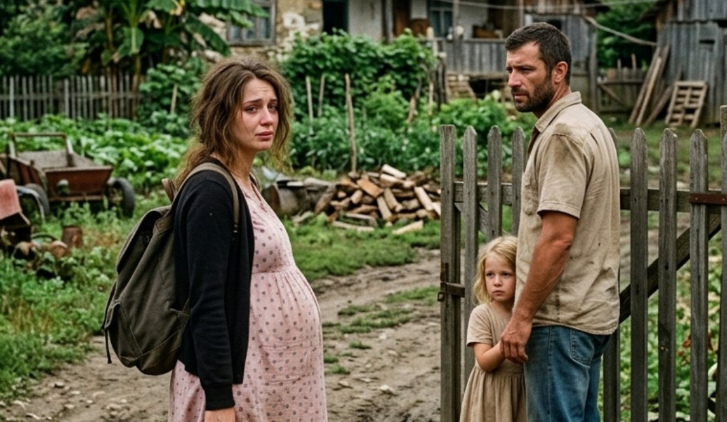
For years, Zoran convinced himself that his wife, Snežana, had stopped taking care of her appearance. He eventually turned his attention to a younger colleague and began an affair, only to realize later that what he had interpreted as his wife “letting herself go” was actually the result of exhaustion and the enormous burden she had been carrying alone in their everyday life.
His confession is not simply a story about one bad decision. It is about how easily exhaustion, silence, and a lack of time can be misunderstood in a marriage.
For a long time, Zoran focused only on the changes he could see: Snežana wore less makeup, spent more time in sweatpants, tied her hair back, and rarely dressed up the way she once had.
What he failed—or refused—to see were the piles of laundry, the bills, the children, the house, and the endless responsibilities that left Snežana with less and less time for herself.
As the days passed, he increasingly convinced himself that his wife had changed in a way he did not like.
Instead of asking himself what her daily routine looked like or how much energy it took to manage the household, the family, and all the small responsibilities that often go unnoticed, Zoran focused on his own perception of her.
Then he began comparing her to a younger colleague at work who always appeared well dressed, polished, and attentive to him.

Misunderstanding the Change
By his own admission, Zoran clearly remembered a time when Snežana had paid much more attention to herself.
She carefully chose her clothes, styled her hair, and wore makeup. Those things had once been a normal part of their everyday life.
Over time, however, life became faster and more demanding. There were more responsibilities and fewer moments when Snežana could focus on herself.
Zoran interpreted that change as a sign that she had stopped caring about her appearance.
In his mind, it became a convenient explanation.
While he saw his wife as someone who was no longer “the way she used to be,” his younger colleague seemed like the complete opposite—well dressed, attentive, and willing to give him the kind of validation he wanted at the time.
The affair became an escape from the realities of home, but it also became a way for him to shift responsibility for his own choices onto someone else.
Zoran began the affair with his younger colleague because he believed Snežana had “let herself go.”
Only later did he understand that she had not stopped caring about herself. She was simply exhausted by the weight of household and family responsibilities.
That way of thinking had not only been wrong, but overly simplistic.
Snežana’s transformation had not happened overnight, nor had it come from indifference.
Behind it were countless days without proper rest, responsibilities that never stopped, and household tasks everyone simply expected her to handle.
As Zoran later admitted, he had spent a long time looking at the result without ever seriously considering the cause.
His story reflects a broader pattern that can happen in many homes.
Changes in someone’s appearance are often noticed immediately, while emotional and physical exhaustion may go unnoticed for much longer.
When responsibilities continue to pile up and support is missing, the person carrying most of the burden is often the first to lose time for themselves.
From the outside, that may look like neglect.
In reality, it may simply be exhaustion.

The Evening He Finally Saw What He Had Been Missing
The turning point came one evening when Zoran returned home earlier than usual.
Instead of seeing the woman he had convinced himself no longer made an effort, he found Snežana asleep on the couch.
Around her were laundry, bills, and things that still needed to be prepared for the following day.
She was so exhausted that she had fallen asleep in the middle of the responsibilities that filled her everyday life.
It was only then, seeing Snežana completely exhausted among the household chores, that Zoran began to understand that her transformation had not been a sign of neglect.
It was the result of the burden she had been carrying every single day.
That scene changed his perspective more than any conversation could have.
The house was in order.
The children were taken care of.
The chores were either finished or still being handled.
And in front of him was the woman he had criticized for not finding enough time to take care of herself.
For the first time, he clearly saw how much of her day was devoted to everyone else’s needs—and how little remained for her.
Zoran later said that this was when he finally understood the difference between “letting yourself go” and being exhausted.
Before that moment, he had treated those two things as if they were almost the same.
In reality, they were completely different.
Snežana had not stopped caring about herself.
After everything she did each day, she simply had too little time and energy left for her own needs.
That single scene represented much more than one woman’s exhaustion.
It contained everything that often remains invisible inside a household: planning, organization, schedules, finances, childcare, housework, and the constant mental responsibility of keeping everything together.
Only when Zoran saw it up close did he begin to think differently about his own responsibilities within the marriage.

What He Changed Afterward
After realizing what had been happening, Zoran began taking responsibility for some of the tasks he had previously left mostly to his wife.
His goal was not only to reduce Snežana’s workload but also to give her back some of the time she could use for herself.
His change did not come through grand promises.
Instead, it came through practical actions that showed he had finally understood how disconnected he had been from the reality of the home they shared.
As his behavior changed, so did his way of thinking.
What he had once interpreted as a lack of effort, he now connected to the enormous amount of work and responsibility he had previously failed to notice.
But one thing did not change.
The affair had still been his decision.
Understanding Snežana’s exhaustion did not excuse his infidelity.
Instead, he finally stopped trying to justify his betrayal by blaming his wife’s appearance or exhaustion.
Today, Zoran describes the affair as his own choice—one for which there is no excuse.
His eventual understanding of Snežana’s exhaustion also forced him to confront the importance of support within a marriage, especially when everyday responsibilities begin pushing aside everything personal and intimate.
His story matters not simply because of the affair itself, but because of the moment he finally understood how easily another person’s exhaustion can be mistaken for indifference.
His realization came with regret and a belated sense of responsibility.
But perhaps, after everything, what Snežana needed most was for someone to finally see everything she had been doing for years without recognition and without rest.
And it was there, in the silence among the bills, laundry, and invisible responsibilities, that Zoran finally understood something he should have recognized much earlier:
Sometimes love is not lost because the feelings disappear.
Sometimes it becomes buried beneath the weight one person has been carrying alone for far too long.
Snežana had been exhausted long before Zoran finally learned how to truly see her.