In a courtroom filled with tension, a young man named Mateo stood before the court, knowing that his life was collapsing before his eyes.
The verdict was delivered without much hesitation—life in prison for a crime he insisted he had not committed.
At that moment, everything was taken away from him except one thing: the right to look at his child one last time.
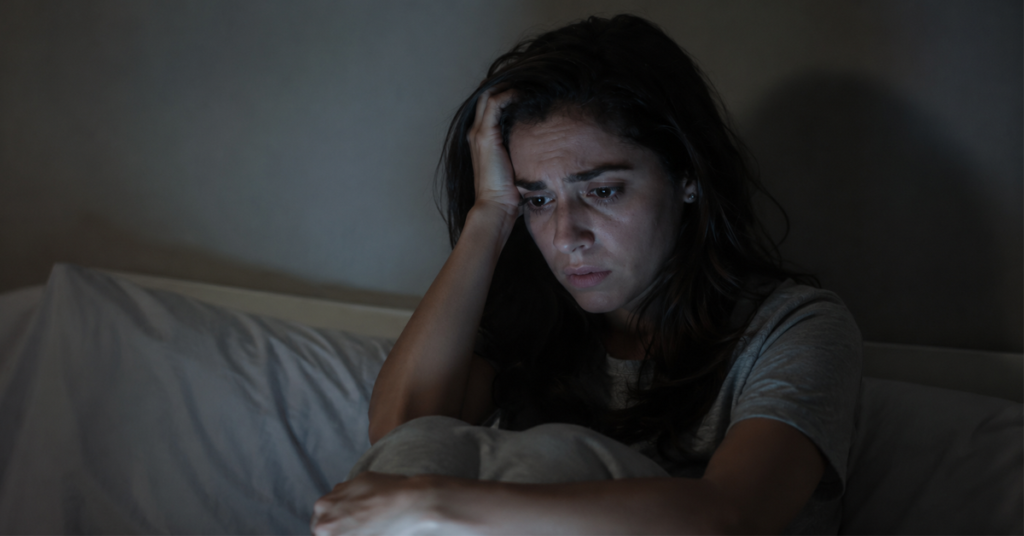
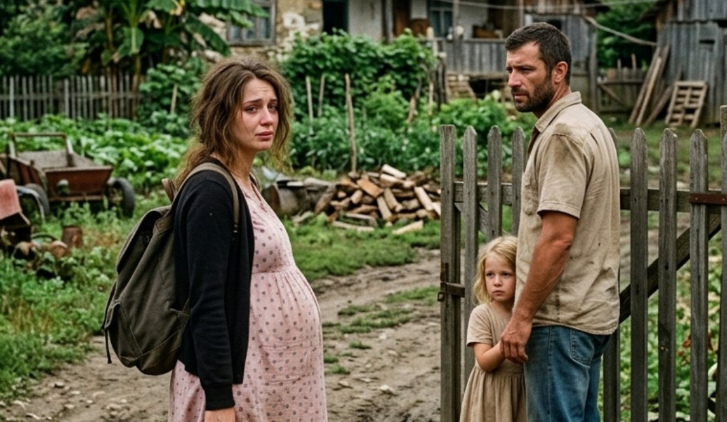
His wife, devastated and exhausted, held their newborn baby as though she were trying to protect him from the world that had just treated their family so unjustly.
Her tears and desperate pleas could not change the decision, but they made the pain and injustice of the situation impossible to ignore.
There was a sense of finality in the courtroom.
Everyone had already accepted the outcome.
Everyone except Mateo.
Mateo wasn’t asking for freedom.
He wasn’t begging for a lighter sentence.
He asked for only one thing—to hold his son for a moment, to feel him in his arms before disappearing from his life.
That simple request echoed through the courtroom more powerfully than any defense argument.
For a moment, the courtroom fell silent.
And in that silence, something changed.
Despite objections, the judge allowed Mateo to have that moment.
It was not simply a legal decision. It was a human one.
Because behind all the evidence, accusations, and procedures stood a human being—a father.
When the baby was finally placed in Mateo’s arms, everything seemed to stop.
There was no courtroom.
There were no accusations.
There was no sentence.
There was only Mateo and his child.
In that moment, Mateo showed something no one could dispute—tenderness, care, and love.
He held his baby so gently that it was difficult to reconcile the man in front of them with the image others had tried to create of him.
But then something unexpected happened.
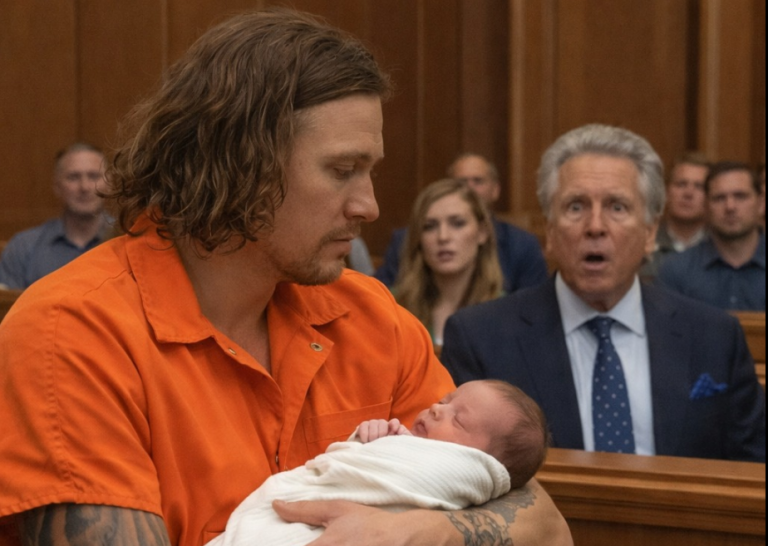
As Mateo adjusted the blanket around his child, he made a movement that seemed insignificant at first.
Yet that tiny detail triggered a reaction no one in the courtroom could ignore.
Sitting in the front row was a man who, until that moment, had appeared confident and composed—a powerful business magnate.
Suddenly, the expression on his face changed.
His confidence vanished instantly, replaced by a fear he could not hide.
And it wasn’t fear without a reason.
It was the fear of a man who had recognized the truth.
Mateo raised something he had kept hidden—something that would change the course of the entire story.
Although no one in the courtroom yet understood exactly what it was, one thing was clear:
It was no ordinary object.
The powerful man’s reaction alone suggested that there was far more behind the case than anyone in the courtroom had previously realized.
According to legal experts and accounts reported by regional media, moments like these can sometimes expose hidden layers of the truth.
When a person has lost everything, sometimes only one thing remains—the truth they no longer have any reason to hide.
Sources that follow court proceedings have pointed out that power and influence can sometimes shape the course of an investigation, but they cannot always erase every trace.
When undeniable evidence finally emerges, the entire system can be called into question.
Experts emphasize that situations like this serve as a reminder of how important it is that justice should never depend on status or influence.
The truth, no matter how deeply it is hidden, has a way of eventually coming to the surface.
Something changed in that courtroom that day.
It was no longer only about the verdict.
It was no longer only about one man.
It had become something much bigger—a story about exposing injustice and confronting a truth that some had tried desperately to hide.
The quietest moment came when Mateo finally raised his eyes.
He wasn’t asking for pity.
He wasn’t asking for understanding.
He simply stared at the man who knew exactly what it all meant.
And then it became clear:
The story wasn’t over yet.
Because sometimes one moment, one decision, and one hidden piece of evidence can change everything.
And what happened next would finally begin to reveal the real truth.